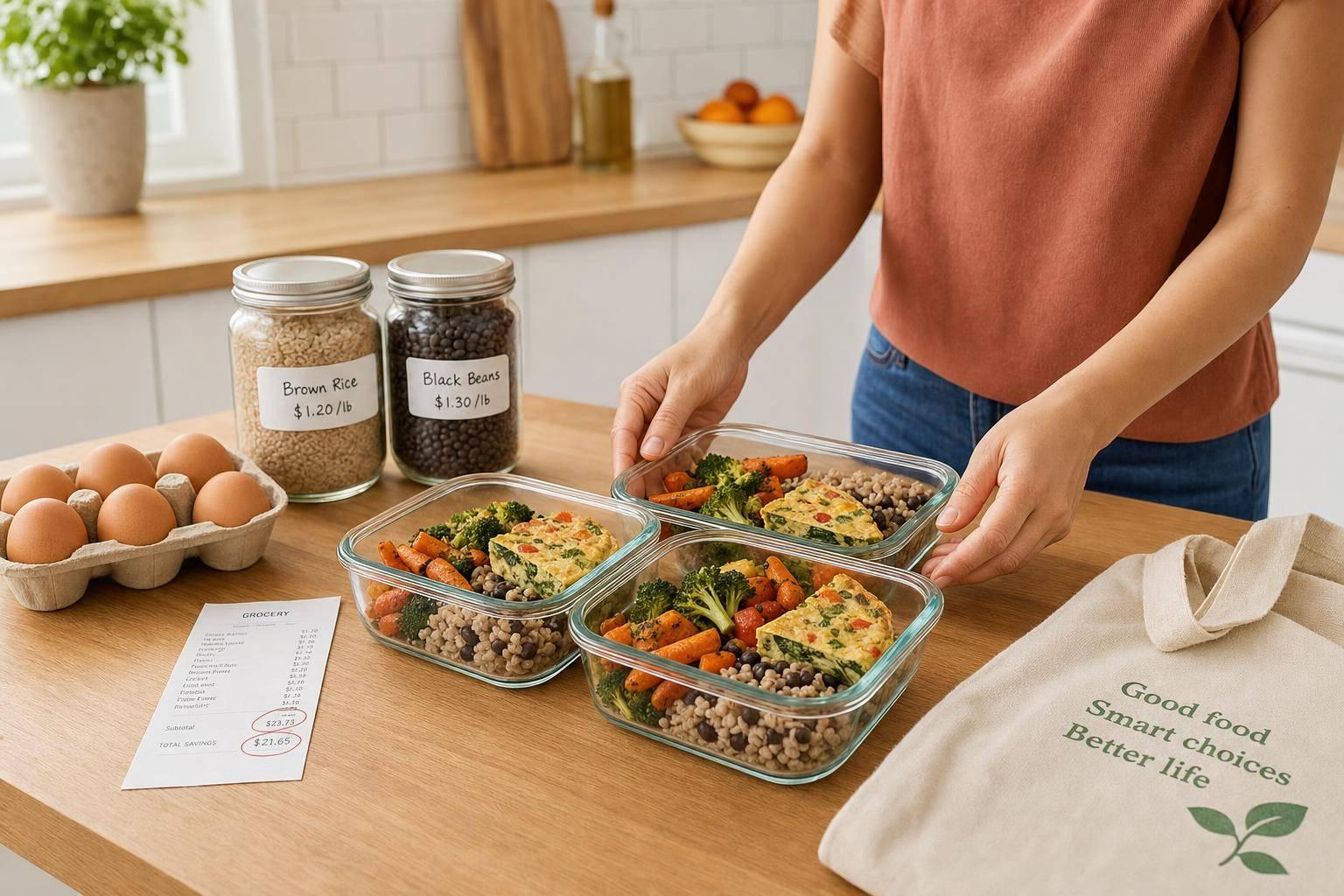
You can eat well for about $2 to $4 per meal in the U.S. if you keep your plan simple. I’d center meals on low-cost staples, shop from a list, use frozen or canned produce when it costs less, batch-cook a few basics, and track grocery spending so takeout and waste don’t eat up the budget.
Here’s the short version:
- Build meals from a small staple list: beans, lentils, rice, oats, eggs, tuna, potatoes, peanut butter, and frozen vegetables
- Use a simple meal pattern: protein + starch/grain + produce
- Plan before shopping: check the pantry, freezer, and fridge first
- Compare unit prices: the lowest shelf price is not always the lowest cost
- Cook once, eat several times: rice, beans, lentils, and eggs can cover multiple meals
- Use leftovers on purpose: one “use-it-up” meal each week can cut waste
- Track spending: split grocery costs from snacks, drinks, and restaurant meals
A few numbers stand out:
- Dried beans can cost about $0.15 per serving
- Oats can cost about $0.12 to $0.18 per serving
- Eggs can run about $0.25 to $0.35 each
- Frozen vegetables often cost about $1.00 to $1.60 for a 16 oz bag
- The average U.S. household throws away about 219 pounds of food per year, or about $1,500
If I wanted to spend less without cutting nutrition, I’d repeat the same system each week: plan, shop, cook, store, and review. That’s the whole idea behind cheap, healthy eating.
| Area | What I’d do | Budget impact |
|---|---|---|
| Meal planning | Pick 2 breakfasts and 2 to 3 dinner types for the week | Helps keep meals near $2 to $4 each |
| Shopping | Buy only what the plan needs and compare unit prices | Helps cut extra spending |
| Produce | Choose in-season, frozen, or canned based on price | Helps lower spoilage |
| Batch cooking | Cook rice, beans, or lentils once for several meals | Saves time and food |
| Leftovers | Add one weekly clean-out meal | Helps cut waste before the next trip |
| Tracking | Log groceries in a separate budget category | Makes overspending easier to spot |
If food costs keep creeping up, the fix is often not a new diet. It’s a tighter system.
Plan low-cost meals around a few reliable staples
Pick staple foods that give the most nutrition per dollar
A small group of staples can carry most of a low-cost eating plan. Build your week around foods like beans, lentils, rice, eggs, peanut butter, frozen vegetables, and potatoes.
The numbers are pretty convincing. Dried black beans cost about $0.15 per serving and give you 8g of protein and 8g of fiber. Rolled oats cost about $0.18 per serving, and brown rice about $0.20 per serving. Eggs run around $0.25–$0.55 per 2-egg serving, with about 12g of protein total.
Plant proteins can stretch your budget even more. Lentils and beans can cost as little as $0.57–$0.60 per 30g of protein, compared with about $1.80 for chicken thighs or $2.30 for ground turkey.
Once you have that short staple list, the goal is simple: turn it into meals you can make again and again without much thought.
Use one meal formula for every meal
A good shortcut is to build meals with the same three-part formula: protein + grain or starch + produce. It works for breakfast, lunch, and dinner, and it helps keep your spending steady.
Here’s how that can look:
| Meal | Formula Example | Estimated Cost/Serving |
|---|---|---|
| Breakfast | Oatmeal + Banana + Peanut Butter | ~$0.62–$0.65 |
| Lunch | Black Bean Quesadilla + Cabbage Slaw | ~$1.40–$1.50 |
| Dinner | Chicken thighs + Rice + Frozen Broccoli | ~$2.25–$2.60 |
| Quick Dinner | Tuna Pasta + Frozen Peas + Lemon | ~$1.50–$2.00 |
This keeps meals simple without making them feel flat. Instead of changing the whole ingredient list, change the flavor base. Rice and beans can turn into a Mexican-style bowl with cumin and salsa, an Italian-style plate with garlic and oregano, or a curry with turmeric and ginger. Same core foods, different feel.
Build a weekly meal outline and track it in Monefy

Map out your meals before you shop. That one habit can save money fast. Pick one or two easy breakfasts, like oatmeal with peanut butter or scrambled eggs with frozen vegetables. Then rotate two or three dinner formats, such as bowls, soups, and stir-fries, across all seven nights. It cuts down on last-minute takeout and those random mid-week grocery runs.
Batch cooking on Sundays makes this much easier. One large pot of rice and a pound of dried beans cooked once can support four or five meals during the week. That also means less cooking on busy weekdays.
In Monefy, split your groceries into at least two buckets:
- Staples for bulk foods like grains and dried beans
- Weekly Fresh for produce and dairy
Then divide your total grocery spend by the number of planned servings to get a cost per meal. Track staples apart from snacks and drinks so you can see where your food money is actually going.
That weekly outline also gives you a tighter shopping list, which makes each grocery trip faster and less expensive.
Shop smarter to lower grocery costs without lowering food quality
Once your meals are mapped out for the week, buy only the ingredients you still need.
Build a shopping list from your pantry, freezer, and weekly plan
Start with a quick check of what’s already in your pantry, freezer, and fridge. Then cross off anything your meals already cover. That small habit can trim grocery spending by 20% to 30%.
Focus first on food that’s close to its use-by date. That helps you use what you paid for instead of letting it go to waste. After that, group the rest of your list by store section, like produce, proteins, and grains. It makes the trip smoother, and it can help you dodge impulse buys that can quietly add 20% to 30% to the average grocery bill.
Once you’ve removed duplicates, check unit prices so you can spot the lowest-cost option for each item.
Compare unit prices, store brands, and bulk sizes before buying
The shelf price doesn’t tell the whole story. The price per ounce or pound does.
A bigger bag of oats might look like the more expensive pick at first glance. But when you compare the unit price, it may cost less per ounce than the smaller box. That’s the number that matters.
Store brands also deserve a close look. As Gabrielle Judd, an Advanced Practice Dietitian at Johns Hopkins Bayview Medical Center, puts it:
"For the most part, store brands are the same quality as brand-name products, but cheaper because of the lack of marketing costs."
Here’s how that can look for everyday staples:
| Item | Store Brand | Name Brand | Savings |
|---|---|---|---|
| Dozen Eggs | $2.20 | $3.00 | 27% |
| 1 lb Dry Rice | $1.00 | $1.70 | 41% |
| 1 lb Dry Beans | $1.10 | $1.80 | 39% |
| 16 oz Frozen Veggies | $1.00 | $1.60 | 38% |
Bulk buying works best for shelf-stable foods like rice, oats, dry beans, and lentils. With perishables, the math can flip fast if part of the food goes bad before you use it. One more thing: store brands are often stocked on the top or bottom shelves, while name brands sit at eye level. So don’t just grab the first item in front of you - look up and down.
Choose seasonal, frozen, or canned produce based on price
When you buy produce, go with the form that gives you the best price and fits your plan for the week.
Fresh produce is often the lowest-cost choice when it’s in season. Summer berries, fall apples, and winter squash are good examples. In-season produce usually costs less when it doesn’t need to travel as far.
Frozen is the steadiest year-round pick. A 16 oz bag of plain frozen broccoli or mixed vegetables usually costs about $1.00 to $1.60, and you can use part of the bag now and save the rest for later, which cuts spoilage.
Canned can also save money on pantry basics. Canned tomatoes, corn, and beans are affordable and shelf-stable. Check the label and choose options with no added salt or no added sugar when you can. If you want the lowest cost per serving, dried beans go even further: about $0.15 per serving, compared with $0.45 or more for canned beans.
sbb-itb-02fd20a
Cook cheap, healthy meals from beans, eggs, oats, rice, and frozen vegetables
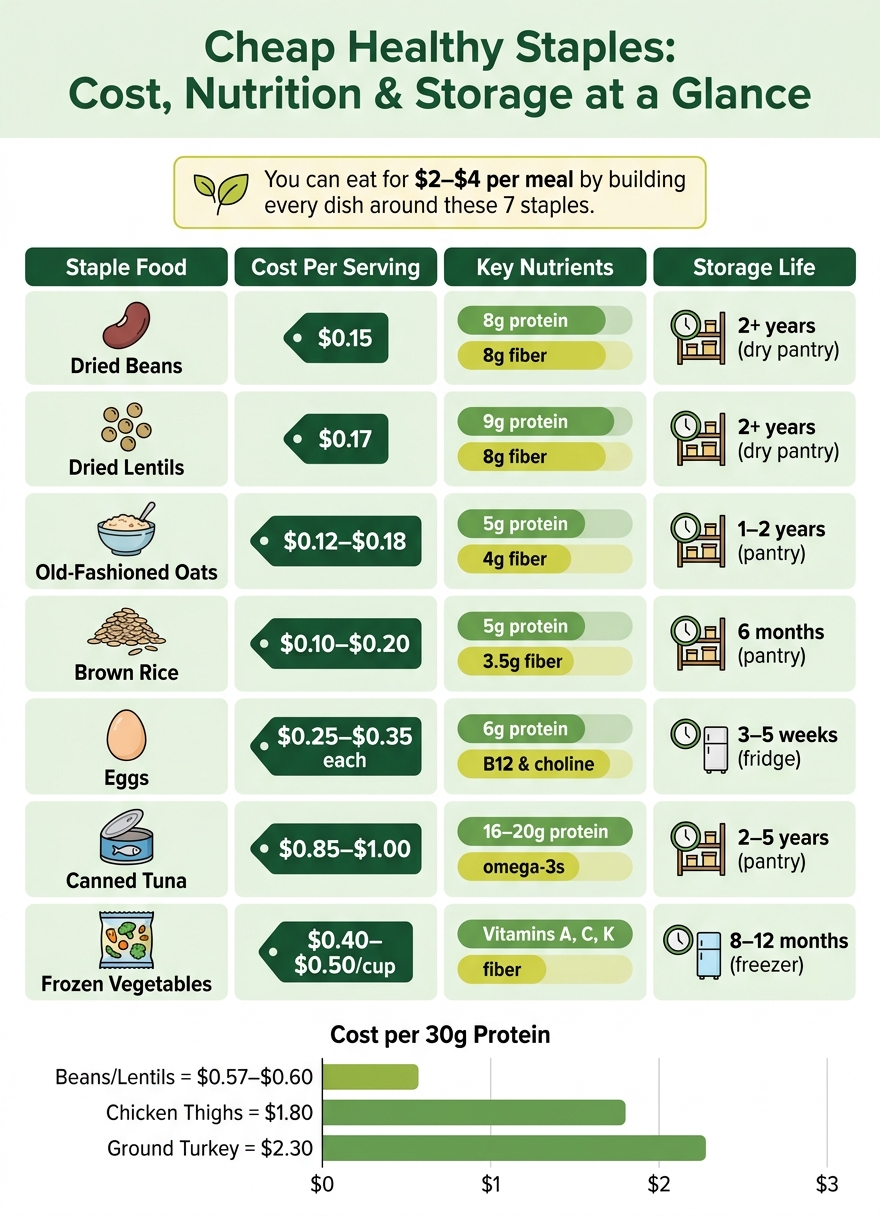
Cheap Healthy Staples: Cost, Nutrition & Storage at a Glance
Once you’ve got your weekly staples, the next step is simple: turn them into meals you can make on autopilot. You don’t need chef-level skills. You need a small set of ingredients, a few easy combos, and a routine you can stick with.
Batch-cook basics once and use them across several meals
Cook once, use it all week. At the start of the week, make a batch of rice, beans or lentils, and eggs. Those basics can cover breakfast, lunch, and dinner with almost no extra work.
Food safety matters here. Cool cooked rice and beans in shallow containers and get them into the fridge within 2 hours of cooking. They’ll keep for 3 to 4 days in the refrigerator. If you won’t finish them in that time, freeze single-serving portions instead.
That one habit saves money and time. Cooked rice and beans freeze well, reheat in minutes, and can give you a meal base for as little as $0.15–$0.45 per serving.
Overnight oats are even easier. You only need oats, milk or water, peanut butter, and banana.
Build fast meals from low-cost proteins and vegetables
When your staples are ready, meals come together fast. A good formula is starch + protein + vegetable + seasoning.
Here are a few easy ways to use it:
- Egg fried rice: Leftover rice + frozen mixed vegetables + scrambled eggs + soy sauce
- Black bean and rice bowl: Black beans + rice + frozen vegetables + salsa
- Tuna rice bowl: Canned tuna + rice + frozen peas + a squeeze of lemon and black pepper
- Stuffed baked potato: One potato + black beans + salsa
- Savory oatmeal: Old-fashioned oats + peanut butter + banana, or oats stirred with a spoonful of cottage cheese for extra protein
Small pantry add-ons do a lot of work. Garlic powder, soy sauce, hot sauce, salsa, and dried spices can make the same base foods taste different from one meal to the next without pushing up your grocery cost.
Frozen vegetables help a lot here too. They work in almost any meal, and you can use only what you need instead of worrying about produce going bad in the crisper drawer.
Staple food comparison table to guide better choices
Use this table to pick the staple that fits your budget, time, and storage space.
| Staple Food | Approx. Cost/Serving (USD) | Key Nutrients | Storage Life |
|---|---|---|---|
| Dried Beans | $0.15 | 8g protein, 8g fiber | 2+ years (dry pantry) |
| Dried Lentils | $0.17 | 9g protein, 8g fiber | 2+ years (dry pantry) |
| Old-Fashioned Oats | $0.12–$0.18 | 5g protein, 4g fiber | 1–2 years (pantry) |
| Brown Rice | $0.10–$0.20 | 5g protein, 3.5g fiber | 6 months (pantry) |
| Eggs | $0.25–$0.35 each | 6g protein, B12, choline | 3–5 weeks (fridge) |
| Canned Tuna | $0.85–$1.00 | 16–20g protein, omega-3s | 2–5 years (pantry) |
| Frozen Vegetables | $0.40–$0.50/cup | Vitamins A, C, K, fiber | 8–12 months (freezer) |
Cut food waste and review spending each month
Store leftovers and staples so they last longer
After you’ve planned meals and done the shopping, the next way to save is simple: use what you buy before it goes bad. The cheapest meal often starts with food that’s already in your kitchen. The average American household throws out about 219 pounds of food each year, which adds up to roughly $1,500. That’s budget money disappearing with nothing on the plate to show for it.
A few small storage habits can help fast. Move cooked grains and beans into airtight containers as soon as they cool. Label freezer containers with the U.S. date format - MM/DD/YYYY - so you know what to use first. Root vegetables like carrots and potatoes tend to last longer than leafy greens, which makes them handy for end-of-week meals.
Plan one weekly use-it-up meal before shopping again
Next, turn that storage habit into one clean-out meal each week. Before your next grocery trip, check the fridge, freezer, and pantry, then build a meal around what’s left. A weekly "clean-out-the-fridge" meal is one of the easiest ways to cut food costs.
Flexible meal formats work best here:
- Grain bowls
- Soups
- Scrambles
- Stir-fries
- Pasta skillets
Swap in whatever produce or proteins are close to expiring. Planned, nutrient-focused meals cost 23% less than spontaneous food purchases. Even one use-it-up meal each week can chip away at that gap.
Conclusion: Build a repeatable system to stretch your food dollars
The system is pretty simple: set a grocery budget you can stick to, plan meals around low-cost staples, shop with unit prices and seasonality in mind, batch-cook once a week, and use what you already have before buying more.
Tracking helps you see whether the system is working. Reducing food waste can save an average of $370 per person per year. Add smarter shopping and steady meal planning, and those savings start stacking up. Log groceries in Monefy, split staples from impulse buys, and compare your monthly total with last month.
FAQs
How can I eat healthy for less than $50 a week?
Eating healthy on less than $50 a week is doable if you keep things simple and build meals around a few low-cost staples.
Start with filling protein sources like chicken thighs, eggs, canned tuna, lentils, and beans. Then add budget-friendly carbs such as oats, rice, and potatoes. That combo gives you plenty to work with without stretching your grocery bill.
For produce, frozen vegetables are a smart pick because they last longer and help you waste less. Seasonal fruit, like bananas, can also keep costs down.
A few small habits make a big difference:
- Buy store brands
- Check your pantry first
- Reuse the same core ingredients across several meals
That way, you spend less, throw away less food, and still put together solid, balanced meals all week.
What are the cheapest high-protein foods to buy?
The cheapest high-protein foods are usually dried lentils and dried beans, including black beans, because they cost very little per serving.
Other low-cost picks include:
- Eggs
- Canned tuna
- Greek yogurt
- Cottage cheese
- Peanut butter
- Tofu
- Frozen vegetables to stretch meals
- Chicken thighs or drumsticks
If you're trying to eat more protein without spending much, these foods are a solid place to start. Dried beans and lentils do a lot of the heavy lifting because they’re cheap, filling, and easy to use in soups, bowls, and side dishes.
How do I meal prep without wasting food?
Choose recipes that share staple ingredients like onions, beans, and canned tomatoes. That way, you can buy more for less and actually use it all instead of letting half a can or a bag of produce sit in the fridge.
Before you shop, check your pantry first. You may already have some of what you need, which helps cut your grocery bill without much effort.
Frozen vegetables can also make meal planning a lot easier. They give you more wiggle room, last longer, and help you waste less food.
It also helps to follow a cook-once, eat-twice routine. Make one meal, then turn the leftovers into lunch or dinner the next day. It's a simple way to save time, stretch your ingredients, and make weeknights feel less hectic.