
If your food and home bills feel out of control, the fix starts with three moves: track what you spend, cap the parts that can shift, and cut waste before it hits your wallet.
I’d keep it simple:
- A family of four now spends about $1,000 per month on groceries
- Many people underestimate food spending by up to 40%
- Small impulse buys can cost more than $1,800 per year
- Food waste can drain about $1,500 per year
- Weekly budget check-ins can help stop overspending before month-end
Here’s the core idea: I’d first pull the last 2–3 months of grocery and utility bills, find the monthly average, and split spending into fixed bills, food/home costs that can shift, and extras. Then I’d set limits in Monefy, trim takeout and subscriptions if food costs are climbing, shop with flyers and pickup, and watch utility use month by month.
What this article covers:
- How I’d find a clear spending baseline
- How I’d set grocery and utility limits in Monefy
- How I’d cut food costs with meal planning, store brands, and unit-price checks
- How I’d lower power and heating/cooling costs with a few home changes
- How I’d use a 30-day reset to keep bills from creeping up again
This is not about cutting every comfort. It’s about seeing where the money goes and making a few sharp changes that give you more room fast.

30-Day Inflation Budget Reset: Week-by-Week Action Plan
1. Find your inflation baseline
Before you change anything, get clear on what you actually spend. Don’t guess. Don’t use rough mental math. Pull the numbers from your own records.
Add up your monthly grocery and utility costs
Start with the last three months of actual spending from the baseline in the introduction. Open your bank statements, credit card records, and utility bills. Then total up what you spent on groceries, electricity, gas, water, trash, and internet. Divide each category by three so you end up with a monthly average that reflects your normal spending.
As you do this, watch for two things.
- Price creep: the same groceries costing more at the same store, or a utility bill that’s higher than it was in the same month last year
- Seasonal spikes: using three months helps smooth those out
If one receipt includes both food and household goods, remove the non-food items so you can isolate your grocery spending. That gives you a cleaner food number, which matters if you want to cut costs without guessing.
Separate must-haves from adjustable costs
Once you have your totals, sort each expense into one of three buckets:
| Category | Examples | Flexibility |
|---|---|---|
| Fixed Essentials | Rent, insurance, minimum debt payments | Low - non-negotiable |
| Variable Necessities | Staple groceries, electricity, gas, water, internet | Medium - can be cut back in some areas |
| Discretionary | Dining out, convenience snacks, streaming subscriptions, hobbies | High - can be reduced or cut |
Groceries need a second pass. Split them into staples and discretionary purchases. Rice, pasta, canned beans, produce, and dairy belong under variable necessities. Convenience snacks, name-brand premiums, and impulse buys belong under discretionary.
Use the same idea with utilities. Heating and cooling are needs. Avoidable power use is where you can trim.
Your baseline should cover fixed essentials and variable necessities. Everything else is optional.
The goal here is simple: figure out what can move so you know where the savings can come from.
Once the baseline is clear, enter those numbers into Monefy and set category limits before the next bill cycle.
2. Use Monefy to track and rebalance your budget

Monefy helps you turn your baseline into category limits you can track in real time. That makes it easier to catch rising grocery and utility costs before they throw off your month. Its categories show which needs are going up and where you may need to shift money.
Set up grocery and utility categories in Monefy
Start by turning your baseline numbers into categories you can review each week.
Don't lump groceries and utilities into broad buckets. Create separate categories for Groceries, Electricity, Gas, Water, and Internet. For groceries, keep supermarket staples in the Groceries category. Put cleaning supplies and toiletries in a Household Supplies category instead. That split makes it easier to see grocery inflation for what it is.
Use Monefy's Note feature to log the store name and unit prices. Over time, that gives you a simple way to spot price creep.
Set up recurring entries for bills you can predict, like electricity, gas, water, and internet. This keeps upcoming cash flow commitments in view before the bill lands. It also helps you plan around due dates and avoid late fees.
Set category limits and move money from non-essentials
Once your categories are ready, compare them with your take-home pay and reset the limits.
Log your fixed essentials - rent, insurance, and minimum debt payments - so Monefy shows what is left for variable spending. That's the part of your budget inflation hits first.
If grocery spending keeps climbing, your old limits no longer fit. Update them to match current costs, but make up the difference somewhere else. Cut takeout, streaming, and impulse spending, then move that money into groceries and utilities so your total monthly spending stays flat. Auditing subscriptions is a good first move, since the average household spends about $273 per month on them.
Use the 50/30/20 rule as a quick gut check: if needs are taking more than 50% of after-tax income, pull from the 30% wants bucket to cover the gap.
Do a short weekly check-in before costs get out of hand
Don't wait until the end of the month to catch overruns. A 10-minute weekly check-in can help you spot trouble early.
Each week, open Monefy and compare your actual spending with your category limits. If groceries have already hit 75% of the monthly cap by week two, you still have time to react. Shop with more intention, pause a discretionary purchase, or move a small amount from a lower-priority category.
End each weekly review with one concrete action. Lower the dining-out limit. Increase the grocery cap a bit. Or flag a utility bill that seems to be running higher than expected.
3. Cut grocery costs with smarter shopping habits
Inflation puts pressure on grocery budgets, so it helps to make the hard choices before you head to the store. Use the grocery cap you set in Monefy to judge which deals are worth it and which ones just look good on the surface.
Use Flipp, Honey, and store loyalty programs before you shop
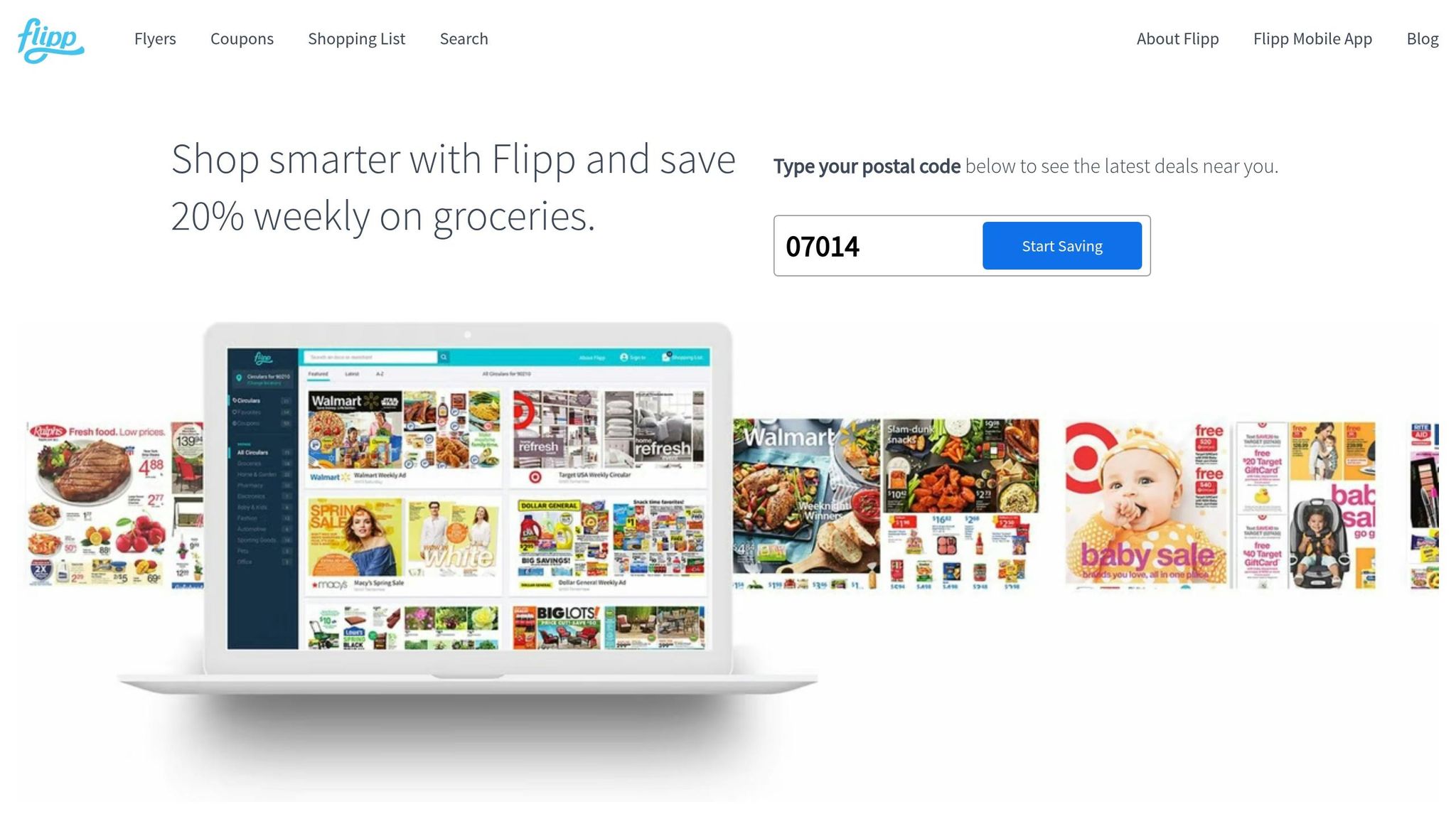
A lot of the best grocery savings happen before you even leave home. Check Flipp for weekly flyers, use Honey for online price alerts, and open store loyalty apps for digital coupons.
Store loyalty apps like Target Circle and CVS ExtraCare can layer digital coupons and member-only pricing on top of sale prices. That’s where the biggest savings tend to come from.
Curbside pickup can also help you stay on track. It keeps you close to your list and lets you see the cart total before checkout. That matters more than most people think. Impulse purchases cost the average household over $1,800 per year, and grocery pickup can save about $200 a month by cutting those extra buys.
Plan meals around low-cost staples and sale items
Once you’ve checked sales and coupons, build your meals around the lowest-cost items for the week. Start with what’s already in your kitchen, then fill in the gaps with sale items.
This approach helps cut waste and lower monthly grocery spending. Staples like rice, pasta, canned beans, eggs, oats, and frozen vegetables are often 20–40% cheaper as store brands than name brands. A simple move is to buy one discounted protein, like chicken thighs or ground beef, and stretch it across two or three meals.
A batch of roasted chicken can become tacos on Tuesday and soup by Thursday
That kind of overlap means fewer trips to the store and less food ending up in the trash. The average family wastes $1,500 worth of food every year, so using the same ingredients across meals is one of the fastest ways to stop that quiet drain on your budget.
Buy in bulk only when the unit price actually drops
Bulk buying works only when the math works. If the unit price is lower, you have room to store it, and you’ll use it before it goes bad, then it can save money. If not, it’s just a bigger receipt.
The best bulk buys are usually shelf-stable foods like rice, pasta, and canned goods, along with frozen vegetables and household basics like cleaning supplies or paper products. Perishables are a different story. They can go bad fast, so check the unit price yourself instead of assuming the bigger package is the better deal.
| Factor | Bulk Buying | Frequent Small Trips |
|---|---|---|
| Budget Impact | Lower unit price; higher upfront cost | Higher unit price; lower immediate cost |
| Impulse Risk | Low, especially with curbside pickup | High; quick runs often add $50+ in unplanned spending |
| Spoilage Risk | High for perishables; requires planning | Low; items bought for immediate use |
| Convenience | Fewer trips, saves time | More trips; adds fuel and transportation costs |
A simple benchmark helps. Chicken breast at $0.99/lb is a stock-up price worth acting on. At $1.99/lb, it’s still a decent sale, but not the kind that justifies buying a month’s supply. Keeping rough target prices in your head for the foods you buy most often makes bulk shopping less emotional and more about plain math.
Once grocery spending starts to settle down, you can use the same approach on your utility bills.
sbb-itb-02fd20a
4. Lower utility bills with targeted home changes
Once grocery spending is under control, take that same mindset to the bills you can trim at home.
Start by cutting heating and cooling costs
Before you buy anything, track one full utility cycle in Monefy. Then pull the bills from the same month last year and compare them side by side. That simple check helps you see what's going on: are costs up because rates went up, because you're using more, or because of both?
That matters. If you don't know what's driving the increase, it's easy to spend money on the wrong fix.
Use smart thermostats and energy monitors where they pay off
If the spike comes from heating or cooling, start there. Don't buy a smart thermostat just because it sounds like a good idea. Buy one only if your bill pattern shows it has a fair shot at paying for itself.
When your tracked data shows a clear seasonal pattern, the decision gets a lot easier. You can spot when heating or AC is pushing costs up, and you can judge whether the upgrade is likely to cut enough from the bill to cover the upfront cost.
Log utility savings in Monefy and put that money to work
After each cut, record the lower bill right away so the savings don't quietly drift into next month's spending. In Monefy, set up a dedicated Utilities category and use the Note feature to log what changed and why, such as "July Electric - AC use". That gives you a clean link between the lower bill and the step that caused it.
When a utility bill comes in lower than expected, use Monefy's Transfer feature to move the difference into savings, an emergency fund, or debt repayment. That way, the money you save on utilities turns into extra breathing room in your budget instead of getting swallowed by the next expense.
5. Build a simple monthly plan to stay ahead of inflation
Once your categories are set, use the first 30 days to lock in habits that stop grocery and utility bills from creeping back up.
Follow a 30-day reset and hold onto the gains
Treat the first month like four focused weeks. Each one has a clear job, and each builds on the last.
In Week 1, just measure. Pull your last 2–3 months of bank and card statements, log every grocery and utility purchase into Monefy, and figure out your actual average monthly spend for each category. Then set your new limits a little below those averages. For groceries, cutting 5–10% is a solid place to start.
In Week 2, tighten up grocery habits. Plan each meal before you shop. Build your list around what you already have in the pantry and fridge. Check Flipp for that week’s sales before adding anything new. It also helps to plan one leftovers meal in the middle of the week so perishables get used before they go bad.
Once grocery spending is under better control, move to the biggest utility drains.
In Week 3, focus on utility waste. Set your thermostat to 68–70°F in winter and 76–78°F in summer, then lower or adjust it by 7–10°F when you’re asleep or away. The U.S. Department of Energy says that simple habit can cut heating and cooling costs by up to 10% per year. Log your starting meter readings in Monefy so you have a clean before-and-after comparison.
In Week 4, review the month. Open Monefy, compare your actual spending with your Week 1 baseline, and look at what worked and what didn’t. If you spent less than planned, move the difference into savings or a bill buffer right away. If you missed a target, choose one clear problem area - like too many small grocery trips or takeout on busy nights - and adjust next month’s limit around that one issue instead of changing everything at once.
At that point, keep the routine simple:
- Do a 10-minute check-in each week
- Review your spending once a month
- Update your limits each quarter based on actual spending
FAQs
How much should I budget for groceries each month?
Start by checking your bank and credit card statements from the last two to three months. That gives you a solid picture of what you usually spend on groceries, not just what you think you spend.
For many households, grocery costs land somewhere between $400 and $600 per month. But family size changes the math quite a bit. A common starting point is about $400 for one person and up to $1,400 for a family of six.
Another simple way to set a grocery budget is to use your income as a guide. A good rule of thumb is to put 10% to 15% of your take-home pay toward groceries.
What if my grocery and utility bills change every month?
If your grocery and utility bills change from month to month, use monthly averages instead of a fixed number. Look back at the past 12 months, add up what you spent, and divide by 12. That gives you a steady monthly target to work with.
For utilities, it can help to set two spending limits: one for high-cost months and one for low-cost months. Then check your actual spending in Monefy on a regular basis and adjust those limits as prices shift.
Which expenses should I cut first when inflation rises?
Start with discretionary, non-essential spending, not your basic needs. In plain English: cut the stuff you can live without before you touch the bills that keep life running.
A good place to start is with unused subscriptions, gym memberships you don't use, frequent takeout, and specialty coffee runs. Those small charges have a way of piling up, and trimming them first can free up cash without turning your whole life upside down.
After that, look at variable essentials. Meal planning can help curb food costs, generic brands can trim your grocery bill, and tracking impulse purchases can show you where money keeps slipping through the cracks.
Then move on to fixed bills like internet or insurance. These costs feel locked in, but they're often worth a second look. You may be able to lower them with a plan change, a call to your provider, or a better rate elsewhere.