
Managing your money can feel overwhelming, especially when traditional methods like spreadsheets add to the stress. Personal finance apps simplify this process by syncing with your bank accounts, tracking expenses, and offering tools to help you budget, save, and set financial goals. Here's a quick look at three popular apps and how they stack up:
- Monefy: Great for manual expense tracking and multi-currency support. Simple and user-friendly, but lacks detailed goal-setting features.
- Mint: Once a favorite for automated tracking, Mint was retired in 2024 and its features moved to Credit Karma.
- YNAB (You Need A Budget): Focused on zero-based budgeting and debt reduction. Offers powerful tools but requires a subscription and active participation.
Quick Comparison
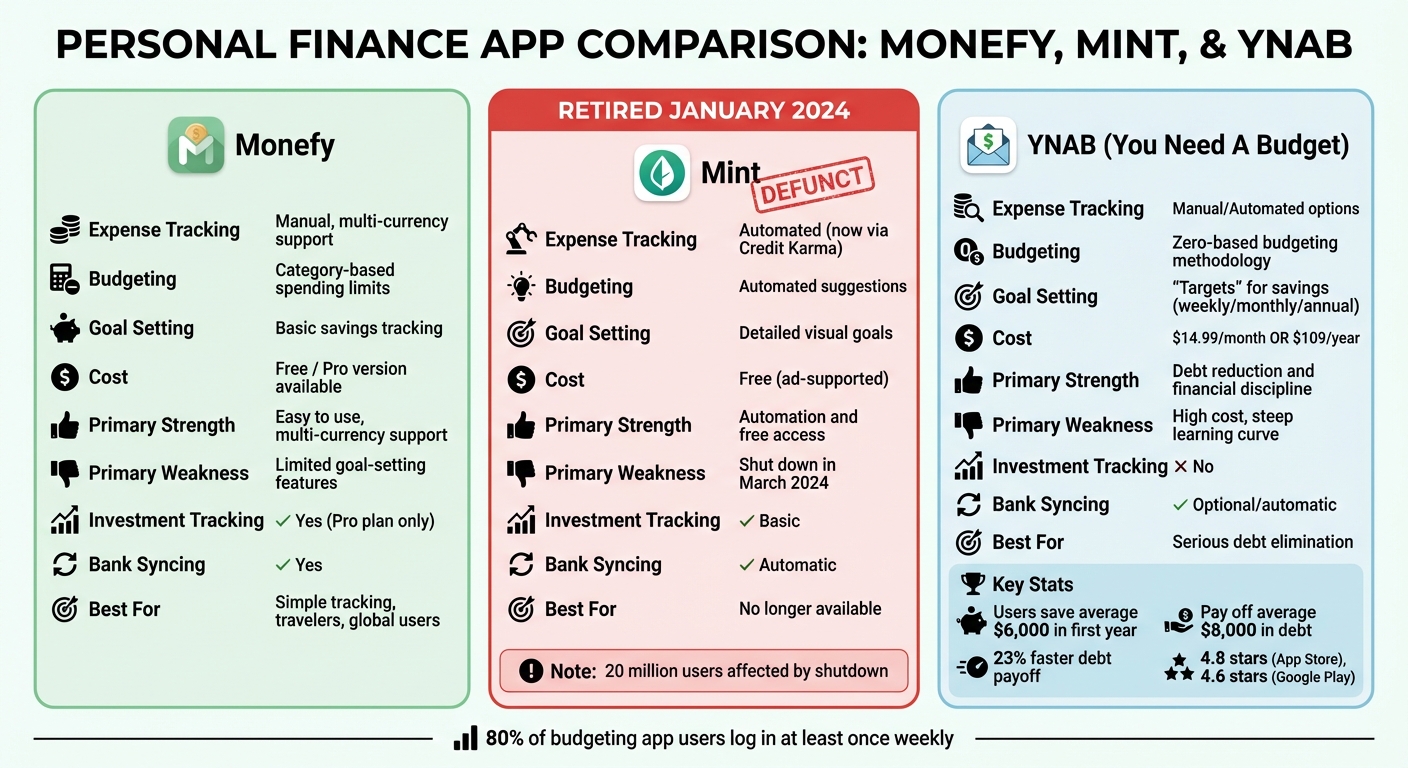
| Feature | Monefy | Mint (Defunct) | YNAB |
|---|---|---|---|
| Expense Tracking | Manual, multi-currency | Automated (via Credit Karma) | Manual/Automated |
| Budgeting | Category-based limits | Automated suggestions | Zero-based budgeting |
| Goal Setting | Basic savings tracking | Detailed visual goals | "Targets" for savings |
| Cost | Free/Pro version available | Free (ad-supported) | $14.99/month or $109/year |
| Best For | Simple tracking, travelers | No longer available | Serious debt elimination |
Each app serves different needs, so choose based on your financial goals. If you want simplicity, Monefy is a solid pick. For strict budgeting and debt reduction, YNAB is worth the investment. Mint users should explore Credit Karma for similar features. The right app is the one you'll use consistently to stay on top of your finances.
Personal Finance Apps Comparison: Monefy vs Mint vs YNAB Features and Pricing
1. Monefy
Expense Tracking
Monefy makes keeping track of your expenses quick and easy. With just one tap, you can record a transaction. Simply pick a category - like groceries, transportation, or entertainment - enter the amount, and you're all set. This hands-on approach is perfect if you prefer to manage your finances manually instead of relying on automatic bank syncing.
One standout feature is multi-currency tracking. If you travel often or deal with money across different countries, this is a game-changer. You can switch between currencies and view your spending patterns in the format that works best for you. Plus, all your data syncs seamlessly across devices. So, whether you're logging a $4.50 coffee on your phone or checking your monthly expenses on your tablet, everything stays perfectly aligned.
Budgeting Tools
Creating budgets in Monefy is simple and effective. You can set spending limits for various categories, helping you keep your finances in check. For example, if you’ve allocated $600 for groceries this month, the app will show you exactly how much you’ve spent so far. Visual cues warn you when you’re getting close to your limits, giving you the chance to adjust before overspending creeps in.
Goal Setting and Savings Tracking
While Monefy doesn't offer a dedicated goal-setting feature like some other financial apps, it still allows you to track your savings progress. You can set up a separate savings account within the app and monitor its balance over time. Monefy’s real strength lies in its simplicity - it won’t walk you through detailed goal-setting steps, but it gives you a clear picture of where your money is going. This clarity can help you make smarter choices about saving. Now, let’s take a look at how Mint approaches personal finance management.
sbb-itb-02fd20a
2. Mint
Expense Tracking
Mint has found a new home within the Credit Karma platform. As of January 1, 2024, the standalone Mint app has been retired, with its key features - like transaction tracking, budgeting tools, and net worth monitoring - now integrated into Credit Karma's offerings.
The updated platform connects with over 17,000 financial institutions, bringing all your financial data - checking accounts, credit cards, and loans - into one centralized dashboard. Transactions are automatically synced and categorized into groups such as groceries, bills, or entertainment. For instance, a coffee purchase might fall under dining, while your electric bill is sorted into utilities. It’s a good idea to review these categorizations regularly to ensure everything is accurate.
This streamlined process provides real-time insights, making it easier to manage your budget effectively.
Budgeting Tools
The platform comes equipped with a daily budget planner that uses your spending history to recommend practical budget goals. It analyzes your habits to suggest limits that align with your lifestyle. Real-time alerts keep you informed about large transactions, ATM fees, or when you’re approaching your budget limits. This gives you the chance to adjust your spending before exceeding your set goals. Plus, the dashboard offers a clear view of your net worth and reminds you of upcoming bill due dates, keeping you organized.
Goal Setting and Savings Tracking
With its integration into Credit Karma, Mint now includes tools to help you set and achieve financial goals. Whether you're saving for a vacation, building an emergency fund, or paying off debt, the platform provides visual checkpoints and progress graphs to keep you motivated. It also highlights spending habits that could be hindering your savings, making it easier to redirect funds toward what matters most. On top of that, the platform offers free credit score monitoring, which can be especially helpful when planning for major purchases like a car or home.
3. YNAB (You Need A Budget)
Budgeting Tools
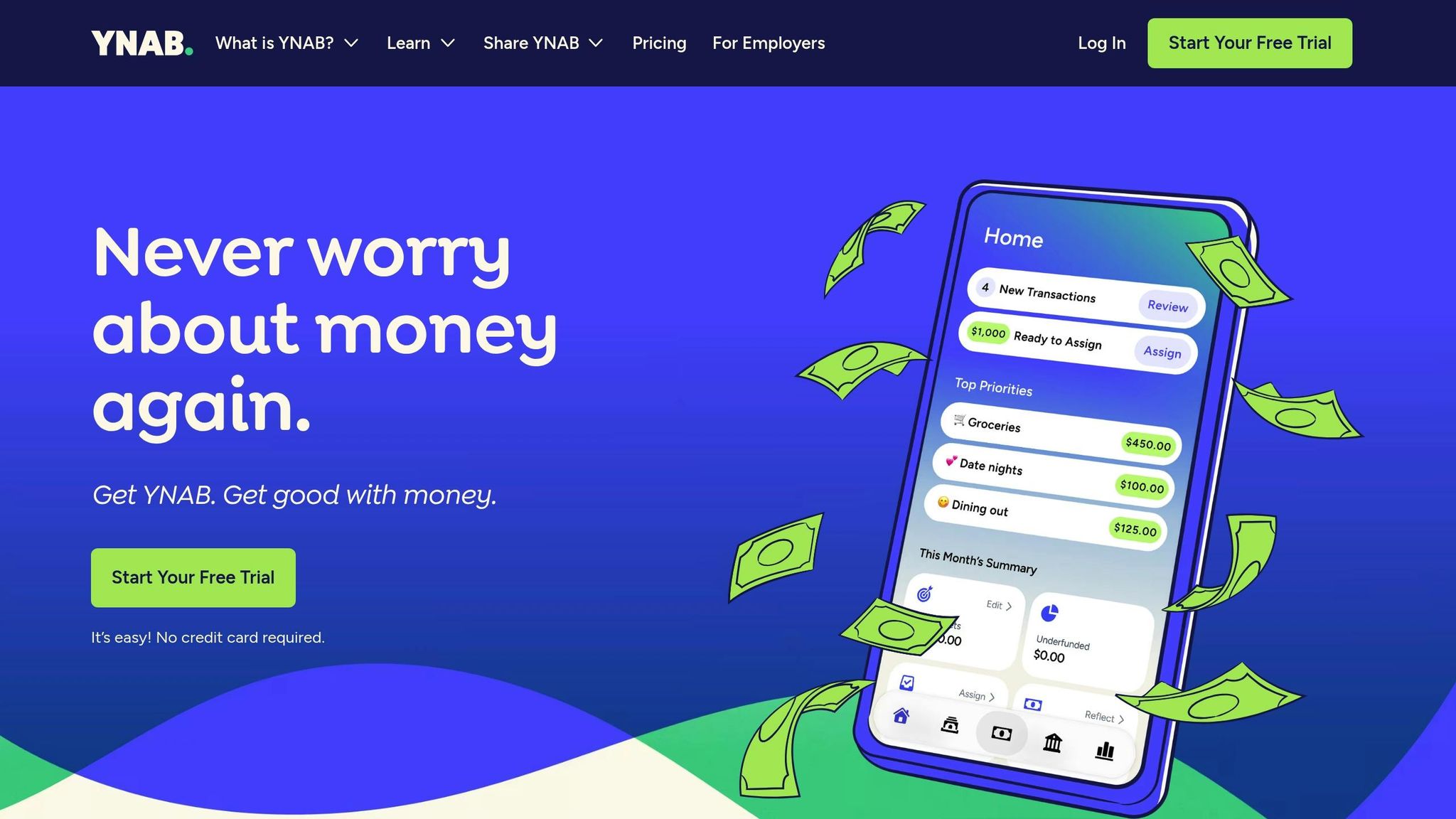
YNAB takes a forward-thinking approach to managing your money. Instead of just tracking where your money has gone, it encourages you to plan where every dollar will go before you spend it. This is known as the zero-based budgeting method, where you assign every single dollar a specific purpose - whether it’s for rent, groceries, savings, or even entertainment - until there’s nothing left unallocated.
The app costs $14.99 per month or $109 annually, but you can start with a 34-day free trial that doesn’t require a credit card. YNAB Together allows up to six users to manage their household finances collaboratively. College students can even enjoy a full year of free access with proof of enrollment. One standout feature is the loan payoff simulator, which shows exactly how much time and interest you could save by putting extra money toward your debt.
YNAB users typically see impressive results, saving an average of $6,000 in their first year and paying off around $8,000 in debt during challenges. The app also boasts excellent reviews, with a 4.8-star rating on the App Store and 4.6 stars on Google Play.
Beyond budgeting, YNAB helps you set clear financial goals and stick to them.
Goal Setting and Savings Tracking
With its "Targets" feature, YNAB makes it easier to work toward your financial goals. Whether you’re saving weekly, monthly, or annually, or trying to tackle large, irregular expenses, the app breaks these goals into smaller, manageable amounts.
A key metric YNAB uses is "Age Your Money", which tracks how long it takes between earning and spending a dollar. The goal? To increase this number, helping you escape the paycheck-to-paycheck grind and build a financial safety net. According to YNAB data, 93% of users feel confident they could handle a $1,000 emergency, and 70% have enough savings to cover three months or more of expenses.
Financial Insights
YNAB doesn’t just help you save - it also gives you a clear picture of your financial health. The app offers detailed spending reports and tracks your net worth, so you always know where your money is going. You can securely link your bank accounts through Plaid or MX for automatic updates, or opt to enter transactions manually if you prefer. Progress bars and color-coded categories make it easy to see how close you are to reaching your financial targets.
"You'll know you've fully transitioned to budgeting (rather than expense tracking) when you use your budget to tell your money what to do - instead of using it to tell you what your money already did."
– Jesse Mecham, Founder, YNAB
While YNAB requires more active participation compared to fully automated apps, it’s worth the effort. In fact, 92% of users report feeling less stressed about money, and 90% say their financial situation has improved since using the app.
Strengths and Weaknesses
Choosing the right financial app depends on understanding its strengths and limitations. Here's a closer look at what each app offers and where it might fall short, based on the features discussed earlier.
Monefy stands out for its straightforward design and support for multiple currencies, making it a solid choice for those who value simplicity and international usability. Its free plan covers basic expense tracking and income management, while the Pro plan unlocks extras like investment tracking and syncing across multiple devices. This balance of ease and functionality makes it ideal for users who want a simple yet effective tool.
Mint was highly regarded for its automated tracking capabilities, which synced seamlessly with bank accounts and categorized expenses without requiring manual input. Its free, ad-supported model made it accessible to millions. However, Mint shut down in March 2024, leaving around 20 million users searching for alternatives. Even before its closure, some users found the ads intrusive and felt it lacked the customization needed for more detailed budgeting. Its shutdown highlights the importance of choosing tools that offer long-term reliability and support.
YNAB (You Need A Budget) is designed with a clear mission: to help users eliminate debt and build financial discipline. Its zero-based budgeting system gives every dollar a purpose, addressing the stress of uncertain spending. YNAB has helped users pay off debt 23% faster, with an average credit card payoff time of 14 months. The app also offers over 100 free workshops to help users master its system. However, YNAB isn’t without challenges - it costs $14.99 per month (or $109 annually) and has a steep learning curve, which can be intimidating for beginners. Additionally, it doesn’t offer investment tracking or bill payment features.
| Feature | Monefy | Mint (Defunct) | YNAB |
|---|---|---|---|
| Primary Strength | Easy to use, multi-currency support | Automation and free access | Debt reduction and discipline |
| Primary Weakness | – | Shut down in March 2024 | High cost, steep learning curve |
| Budgeting Method | Traditional tracking | Traditional tracking | Zero-based budgeting |
| Cost | Free plan; Pro plan adds features | Free (ad-supported) | $14.99/month or $109/year |
| Investment Tracking | Yes (Pro plan) | Basic | No |
| Bank Syncing | Yes | Automatic | Optional/automatic |
| Best For | Simple tracking, global users | No longer available | Serious debt elimination |
Conclusion
After exploring the standout features of each app, it's clear that they cater to different financial needs and priorities.
Monefy shines with its straightforward expense tracking and multi-currency support, making it a solid option for users seeking simple financial management. Its free plan offers the basics, while the Pro version steps it up with tools like investment tracking and multi-device syncing.
On the other hand, YNAB is a top pick for those laser-focused on debt reduction and strict budgeting. Its zero-based budgeting approach ensures every dollar is accounted for, helping users take control of their finances. However, it does require dedication to fully embrace its methodology.
Ultimately, the best budgeting app is the one you’ll stick with. Roughly 80% of budgeting app users log in at least once a week, emphasizing that consistency is more important than having every feature imaginable. Think about your habits: Do you prefer manually entering expenses, or do you lean toward automated tracking? Are you ready to invest time in learning a new system, or do you need something you can dive into right away?
Start by defining your primary financial goal - whether it’s cutting back on spending, paying off debt, or growing your savings. Many premium apps offer free trials (for instance, YNAB offers a 34-day trial), so you can test the waters before committing. And with Mint no longer available, it’s essential to choose a tool that not only fits your needs but is actively supported and reliable for the long haul.
Pick the app that aligns with your goals and seamlessly fits into your daily routine.
FAQs
What makes Monefy a great tool for tracking expenses manually?
Monefy offers a fast and straightforward way to manually track your expenses, making it convenient to log every purchase as it happens. Thanks to its one-tap entry system, you can quickly input an amount and pick a category in just a few seconds - no lengthy forms or complicated processes required. The app’s user-friendly layout ensures that keeping tabs on your spending feels like second nature.
By logging transactions immediately, Monefy gives you up-to-the-minute insights into your spending patterns. Clear visual pie charts and detailed lists break down where your money is going, making it easier to identify trends, cut back on unnecessary costs, and stick to your budget. You can even tailor categories to suit your lifestyle, and with seamless syncing across devices, your financial data stays current no matter where you are.
These tools turn manual expense tracking with Monefy into a practical habit, helping you save more, pay off debt, and stay on course toward your long-term financial goals.
How does the zero-based budgeting method in YNAB help reduce debt?
YNAB’s zero-based budgeting system is all about giving every dollar you earn a job. Whether it’s paying off debt, covering monthly bills, or saving for something important, this method ensures your money is working exactly where you need it.
By deliberately assigning funds to debt payments, you’ll naturally limit unnecessary spending. This focused approach not only speeds up debt reduction but also puts you in the driver’s seat when it comes to managing your overall finances.
What should Mint users do now that the app has been discontinued?
If you’ve been using Mint, you now have the option to move your account over to Credit Karma. Many of the features you’ve come to rely on, like budgeting tools and net-worth tracking, have been revamped on the new platform. This way, you can keep managing your finances efficiently while still using tools you already know.
Take some time to explore what Credit Karma offers to make sure it fits your financial needs and goals before making the transition.