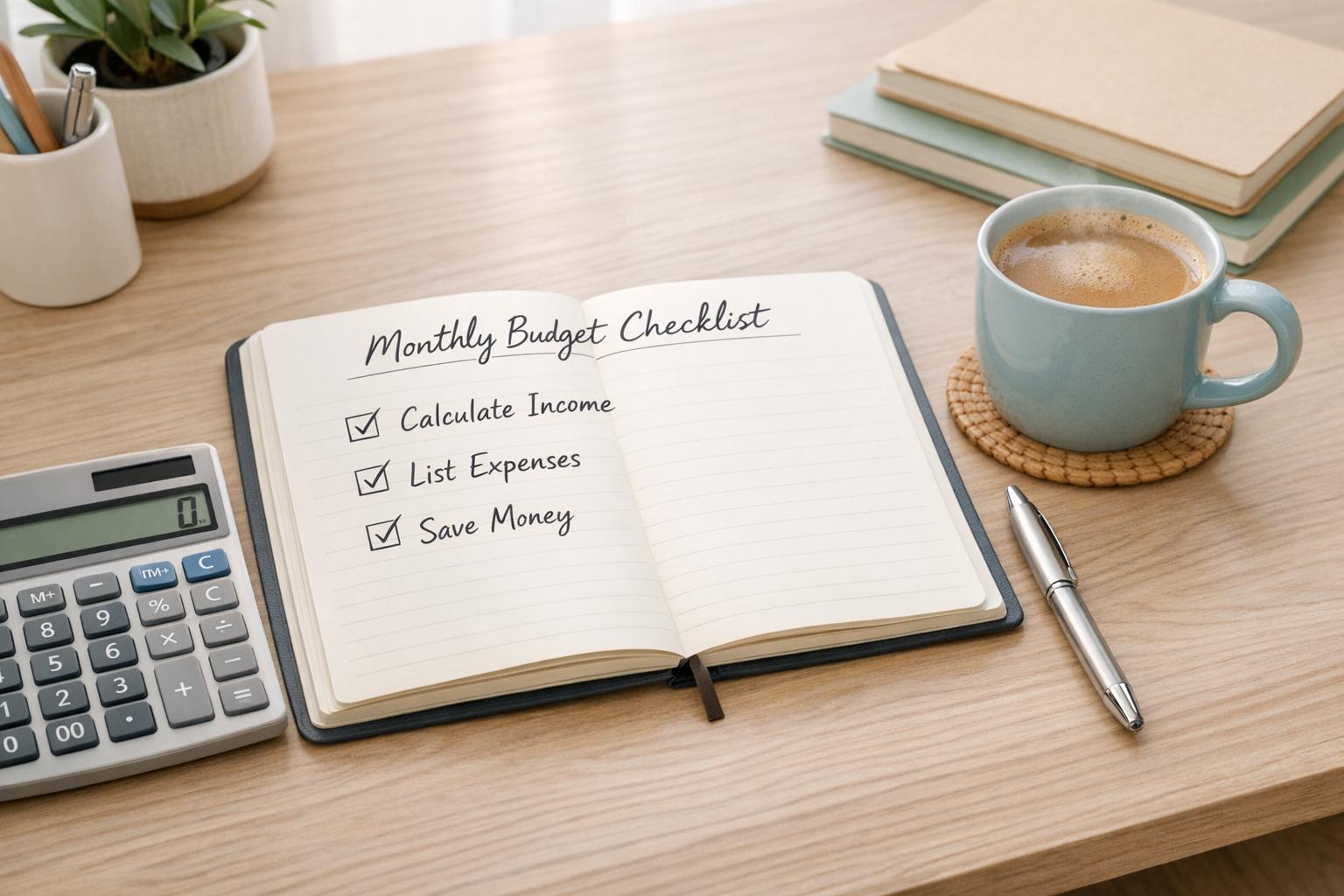
Ever wonder where your money disappears by the end of the month? A monthly budget can help you track your income, control spending, and prioritize savings. Here’s a quick breakdown of how to get started:
- Know Your Income: Focus on your net income (after taxes/deductions) to avoid overspending.
- Track Fixed Expenses: List recurring costs like rent, utilities, and insurance.
- Monitor Variable Expenses: Adjust flexible costs like groceries, dining out, and entertainment.
- Set Savings Goals: Aim for an emergency fund (3–6 months of expenses) and tackle debt.
- Use Tools: Apps like Monefy help you stay on track by logging expenses manually.
Budgeting isn’t about cutting out all fun - it’s about understanding your habits and aligning spending with your goals. Start small, review monthly, and make adjustments as needed.

5-Step Monthly Budget Checklist for Beginners
Step 1: Calculate Your Total Monthly Income
Before you can manage your money effectively, you need to know exactly how much you have coming in each month. The key here is to focus on your net income - the amount that actually hits your bank account after taxes and deductions. As Bank of America explains, "Building an effective budget often starts by assessing your net income or take-home pay".
Your net income is what’s left after deductions like federal, state, and local taxes, as well as contributions to benefits such as a 401(k) or health insurance premiums, are taken out. For the 2026 tax year, federal income tax rates range from 10% to 37%, while FICA taxes take 7.65% of your paycheck - 6.2% for Social Security (up to a $184,500 wage cap) and 1.45% for Medicare.
Relying on your gross income (before taxes) can lead to overestimating how much you can spend, so it’s important to check your most recent pay stubs to see the actual amount deposited. From there, list all your income sources to get a full picture of your monthly earnings.
List All Income Sources
Make sure to include all sources of income: your main salary, freelance work, gig jobs, child support, government benefits, or anything else that adds to your monthly cash flow. For freelance work, remember to subtract any business expenses and set aside about 15.3% for self-employment taxes, which cover both the employee and employer portions of FICA.
If your income fluctuates, take last year’s total earnings and divide by 12 to estimate your monthly average. It’s also smart to keep a cushion of several months’ income in case of unexpected shortfalls. To ensure accuracy, double-check your deposited amounts by reviewing your bank statements.
Step 2: Identify and Categorize Fixed Expenses
After determining your monthly income, the next move is to pinpoint your fixed expenses - those regular, recurring costs that are part of your financial routine. Think rent or mortgage payments, car insurance, utilities, internet service, and minimum debt payments. A common guideline, the 50/30/20 budgeting rule, suggests that about 50% of your take-home income should go toward these necessities.
To get a clear picture, go through your bank and credit card statements from the last two or three months. Look for recurring charges, and don’t forget the smaller ones - streaming services, gym memberships, or subscriptions all count as fixed costs. As Miranda Marquit, a freelance financial writer for Britannica, notes:
A budget helps you see where your money is going and whether you're using it to take control of your financial decisions.
For expenses that don’t occur monthly, like quarterly or annual bills (e.g., property taxes or car insurance), calculate a monthly average. For example, if your annual car insurance is $1,200, set aside $100 each month.
Organize these fixed expenses into categories such as Housing, Transportation, Insurance, and Subscriptions. This structure makes it easier to track where your money is going and ensures you understand your financial commitments before spending on non-essentials.
Create a Fixed Expense Table
A simple table can help you visualize your recurring expenses. Use standard US currency formatting (e.g., $1,234.56) for clarity. Here’s an example:
| Fixed Expense Category | Example Item | Monthly Cost |
|---|---|---|
| Housing | Rent / Mortgage | $1,500.00 |
| Utilities | Electricity & Water | $150.50 |
| Transportation | Car Payment | $350.00 |
| Insurance | Auto Insurance (Averaged) | $125.00 |
| Communication | Internet & Cell Phone | $85.00 |
| Subscriptions | Streaming Services & Gym | $45.99 |
| Total Fixed Expenses | $2,256.49 |
This table provides a clear snapshot of your fixed expenses. If these costs exceed 50% of your income, it’s worth revisiting areas like premium subscriptions or other non-essential services to make room for your most important financial obligations.
Step 3: Track and Categorize Variable Expenses
Variable expenses cover things like groceries, gas, clothing, entertainment, and dining out - areas where spending can be adjusted to save money or pay off debt. As the Consumer Financial Protection Bureau explains:
Until you get a realistic picture of how much money you're bringing in and where it's going, it's difficult to know whether you'll have enough left over to put away.
Start by reviewing your bank and credit card statements from the past one to three months. Many financial institutions already group your transactions into general categories like "automotive", "entertainment", or "department stores", which gives you a helpful starting point.
Next, refine those broad categories into more specific ones. For example, instead of grouping all food-related expenses under "Food", split them into "Groceries" and "Dining Out/Takeout." This level of detail gives you a clearer picture of where your money is going and highlights areas where you can cut back. Don’t ignore small, daily purchases - they may seem minor, but they can add up over time. Also, check for any recurring charges you might have forgotten about, like unused subscriptions or memberships.
When analyzing your variable expenses, use the same "needs vs. wants" approach you applied to fixed expenses. This method makes it easier to decide which costs to reduce if your budget feels tight. Once you've categorized your spending, the next step is to estimate these expenses using past data.
Use Historical Data for Estimates
To get accurate estimates, review two to three months of spending records. Calculate monthly averages by adding up the totals from recent months. For irregular expenses - like holiday gifts, car repairs, or semi-annual insurance premiums - look back over the past year. Add up the yearly total for these items and divide by 12 to find a monthly amount to set aside. This way, you can plan for occasional costs and avoid unexpected expenses throwing off your budget.
Step 4: Set Savings Goals and Plan Debt Repayments
After tracking your income and expenses, the next step is deciding how much to allocate toward savings. This includes building an emergency fund, paying down debt beyond the minimum, and setting aside money for retirement or other long-term objectives. Think of savings and extra debt payments as fixed expenses - non-negotiable commitments, not something to fund only if there’s leftover cash at the end of the month.
Experts suggest having an emergency fund that can cover 3 to 6 months of living expenses. By treating savings and additional debt payments as essential, you solidify your commitment to financial stability.
When managing debt, minimum payments should be included in your "Needs" category since they’re necessary to avoid default. Any payments above the minimum - like paying $300 instead of $150 on a credit card - should count as part of your savings and debt repayment plan. This approach clearly separates making progress on debt from simply staying afloat.
To stay consistent, consider automating transfers for savings and extra debt payments directly from your paycheck. Automation reduces the temptation to spend that money elsewhere and ensures your financial priorities are met before discretionary spending takes over. Next, let’s explore how the 50/30/20 rule can help you structure your budget effectively.
Understand the 50/30/20 Rule
The 50/30/20 rule is a straightforward budgeting method that divides your after-tax income into three categories: 50% for needs, 30% for wants, and 20% for savings and debt repayment. As Investopedia puts it:
The 50/30/20 budget rule has you put 50% of your income to needs, 30% to wants, and 20% to savings.
Here’s how it works. The "Needs" category (50%) includes essential expenses like rent or mortgage, utilities, groceries, transportation, insurance, and minimum debt payments. The "Wants" category (30%) covers discretionary spending such as dining out, streaming subscriptions, hobbies, vacations, and gifts. Finally, the remaining 20% is dedicated to your future - building an emergency fund, contributing to retirement accounts like a 401(k) or IRA, and making extra payments on debt.
For example, a recent graduate earning $3,500 after taxes successfully applied this rule by automating his savings contributions.
It’s important to remember that the 50/30/20 rule is a flexible guideline, not a strict formula. If you live in an area with high living costs or find that your essential expenses exceed 50% of your income, you can adjust the percentages to suit your situation while still prioritizing savings and debt repayment.
| Category | Percentage | Examples of Expenses |
|---|---|---|
| Needs | 50% | Rent/mortgage, utilities, groceries, insurance, minimum debt payments |
| Wants | 30% | Dining out, streaming services, travel, hobbies, non-essential shopping |
| Savings & Debt | 20% | Emergency fund, retirement (IRA/401k), extra debt principal payments |
sbb-itb-02fd20a
Step 5: Use Monefy for Expense Tracking and Budget Creation

After setting up your budget using the 50/30/20 rule, the next step is keeping tabs on your spending to ensure you’re sticking to the plan. That’s where Monefy comes in. With over 11 million downloads globally and an impressive 4.7/5 star rating from more than 283,000 reviews, this app makes tracking every dollar a straightforward process.
Unlike apps that automatically sync with your bank, Monefy requires you to manually log each transaction. While this might sound tedious, it keeps you actively involved in managing your money. Studies show that relying on memory often leads to underestimating expenses by 20–30%. This hands-on approach makes Monefy a powerful companion for maintaining financial discipline.
The app uses easy-to-read distribution charts to help you understand your spending patterns at a glance. You can track multiple accounts - such as checking, savings, credit cards, and even cash - giving you a full picture of your finances. It also features a transfer tool to record money moved between accounts (like transferring funds from checking to savings) without creating duplicate entries. Whether you’re just starting or looking to fine-tune your budget, Monefy’s features make expense tracking a breeze.
The free version covers basic tracking needs, while Monefy Pro adds advanced tools like cloud sync, reminders, multi-currency support, and the ability to export data to CSV or Excel files [23,24,25].
Key Features of Monefy
To get started, track all your expenses for one week. This will give you a clear view of your spending habits. Make it a habit to log purchases immediately, even small cash transactions, to ensure nothing slips through the cracks.
Keep your expense categories simple - 8 to 12 categories work best. Too many options can make daily tracking overwhelming. While Monefy comes with default categories, you can customize them to better suit your lifestyle. You can also use the notes feature to add context to specific expenses, like “emergency vet visit,” which can be helpful during monthly reviews.
Instead of checking your balance daily, aim for weekly reviews. This gives you enough time to spot trends and make adjustments without adding unnecessary stress. If you’re managing shared expenses, the Pro version’s cloud sync feature allows real-time updates across multiple devices - perfect for families or roommates. At the end of each month, export your data to Excel to analyze spending trends and prepare for seasonal expenses.
Monthly Budget Checklist Items
Creating a monthly budget doesn’t have to feel like a chore. With a clear process, you can turn your financial data into a practical plan. Start by gathering your pay stubs, bank statements, and bills to get a clear picture of your cash flow. Then, calculate your net income. If your earnings fluctuate, use the lowest monthly income from the past year as your baseline. For those who are self-employed, it’s wise to set aside 25–30% of your income for taxes to avoid surprises come tax season.
Next, sort your expenses into three main categories: fixed essentials (like rent and insurance), variable necessities (groceries, utilities), and discretionary spending (entertainment, dining out). Don’t forget about irregular expenses - convert annual or quarterly bills, like car insurance or property taxes, into monthly amounts so they’re accounted for in your plan.
To stay on track, log your transactions daily using tools like Monefy. If daily tracking feels overwhelming, set a weekly reminder to review your receipts and bank statements instead. At the end of the month, compare your actual spending with your planned budget. Use this comparison to adjust your spending categories for the next month.
If you find yourself with leftover funds, give that money a purpose. You could use it to build an emergency fund (aim for three to nine months of living expenses) or pay down high-interest debt. Another smart move is contributing enough to your 401(k) to secure the full employer match - this is a key step toward long-term financial security. Make it a habit to review your budget every month and tweak it as needed to stay aligned with your financial goals.
Review and Adjust Your Budget Monthly
Taking time each month to review your budget is a game-changer. By comparing what you planned to spend with what you actually spent, you can spot trends and make smarter adjustments. As Monefy puts it, "Your monthly budget review is where the real magic happens - this is when you fine-tune your allocations based on actual spending data". This step turns your initial estimates into actionable insights, helping you align your financial goals with your real-life spending habits.
Set aside about 30 minutes each month for a "Money Date". Use this time to dive into your Monefy reports and review spending in each category. For instance, if you’ve been spending less than expected on gas, you could redirect that extra cash toward paying off debt or adding to your emergency fund. On the flip side, if your grocery bills are consistently higher than planned, look for areas like dining out or entertainment where you can cut back. The key is to identify patterns and adjust your budget to reflect your actual needs.
You might notice that small, everyday purchases add up more quickly than you realized, or that certain days - like weekends - are heavier on spending due to social activities. Interestingly, research shows that budgeters who set weekly spending caps are 73% more likely to stick to their budget.
If you’re dealing with significant overspending, don’t try to fix it all at once. Spread the adjustments over two or three months to keep things manageable. As Hillary Seiler, Founder of Financial Footwork, advises, "The moment you try to tackle your budget in one sitting, you're setting yourself up for failure… just do the reps like a training program".
Compare Actual vs. Planned Spending
A simple comparison of your planned and actual spending can highlight where adjustments are needed. Use a table like the one below to track discrepancies and guide your decisions for the next month:
| Category | Planned Budget | Actual Spending | Difference | Adjustment for Next Month |
|---|---|---|---|---|
| Groceries | $400 | $450 | -$50 | Increase budget or cut dining out |
| Dining Out | $200 | $120 | +$80 | Move surplus to savings/debt |
| Utilities | $150 | $165 | -$15 | Adjust for seasonal variation |
| Entertainment | $100 | $90 | +$10 | Keep as buffer |
| Total | $850 | $825 | +$25 | Allocate to Emergency Fund |
You can replicate this table in Monefy or a basic spreadsheet to keep track of your progress. If you notice consistent over- or underspending in a category, adjust your budget for the following month. It’s worth noting that around 37% of Americans cannot cover a $400 emergency with cash, so any surplus should ideally go toward building your safety net. Successful budgeters typically spend about 30 minutes each month reviewing and tweaking their budgets based on actual spending patterns. Regular adjustments like these can keep your finances on the right track and help you make steady progress toward your goals.
Conclusion
Reviewing your checklist and tweaking your spending habits each month can pave the way to stronger financial stability. By following a simple routine - calculating your income, categorizing expenses, setting savings goals, and tracking everything with Monefy - you create a practical roadmap for managing your money effectively. Each step, from understanding your earnings to using Monefy for active tracking, helps you build a strategy that’s both adaptable and focused on long-term financial health.
The secret to success isn’t perfection - it’s consistency. While nearly 9 out of 10 Americans report using some form of a budget, less than 1 in 4 stick to it regularly. Dedicating just 15 to 30 minutes each week to review your spending can turn this into a sustainable habit over time. Budgeting is about aligning your spending with your priorities. When you know exactly where your money is going, you can direct it toward what truly matters - whether that’s building an emergency fund, tackling debt, or saving for a dream goal.
Monefy simplifies this process with features like automated categorization, real-time spending insights, and easy-to-read reports, cutting down on the manual work of tracking. With a clear plan and regular check-ins, you can take control of your finances and focus on what’s most important to you.
FAQs
How do I estimate my monthly income if it varies?
If your income fluctuates each month, you can figure out an average to help with budgeting. Simply add up all your earnings - whether from your paycheck, side gigs, or other sources - over the past 3 to 6 months. Then, divide that total by the number of months. This method gives you a solid estimate to work with. If you want to play it safe, you could use the lowest monthly income from that period as your starting point instead.
How can I lower my fixed monthly expenses?
Lowering your fixed expenses starts with taking a closer look at your recurring bills. These might include your rent or mortgage, insurance, utilities, internet, phone service, and car payments. Start by identifying your largest expenses and exploring ways to bring those costs down.
Here are a few strategies to consider:
- Negotiate or shop around: Reach out to your service providers and ask about available discounts, promotions, or cheaper plans. Many companies are willing to match a competitor's price if you bring it up.
- Downsize or refinance: If your housing costs feel overwhelming, think about moving to a smaller home, finding a roommate, or refinancing your mortgage to lock in a lower interest rate.
- Eliminate unused subscriptions: Take a look at your recurring services - like streaming platforms or gym memberships - and cancel the ones you rarely use.
Even small changes, like cutting back on utility usage or consolidating loans to secure better rates, can add up over time. By regularly reviewing your expenses and focusing on savings, you can free up more money for your other financial priorities.
How can I adjust the 50/30/20 budgeting rule for living in an expensive area?
The 50/30/20 rule is a solid foundation for budgeting, but if you live in an area with high living costs, you might need to tweak it a bit. For instance, if housing or other essential expenses eat up more than 50% of your income, you could adjust by cutting back on discretionary spending (the 30%) or temporarily putting less into savings (the 20%) until things stabilize.
There are also ways to trim fixed costs. Consider options like getting a roommate, renegotiating your bills, or canceling non-essential services. The goal is to stay adaptable, focus on your financial priorities, and make the rule work for your unique situation.